|
My mother, Erna Bandit, was born in Czernowitz, Romania, into a German-speaking Jewish family, in 1927. After two and a half awful years in the Holocaust ghettos of Transnistria, my mother and her family moved to Galati, Romania, in 1946. There my mother married Israel Rubin, my father, who was born in Galati in 1914, and I was born there in 1954 named Julian.
At the end of 1961, when I was eight years old, our family emigrated from Romania to Israel. On our way we stopped, for a few days, in Korneuburg – a small town near Vienna.
This year (2019) we visited Vienna and it seemed only natural and exciting, despite vague memories, to visit the transit camp again or what was left of it.
Contents
|
| Korneuburg, Austria |
|
When I planned the trip, I had not remembered the exact location of our transit camp because I was only eight at the time – unfortunately, my parents passed away and I had not whom to ask. After futile efforts with Google, I posted in a Facebook group intended for Israeli people of Romanian-Jewish descent and within a few minutes, "Korneuburg" showed up several times. Although other locations were mentioned, Korneuburg was mentioned in the context of a former military camp, which was in accordance with some blurred memories of mine and also the dates mentioned were suitable. Bingo!
In September 2019 we, my wife (Esther) and I, arrived at Korneuburg, hopeful but also skeptical, at the same time, about the prospects of finding something meaningful about the transit camp.
Korneuburg, located on the banks of the Danube 12 Km from Vienna, is a clean and tidy pastoral town with a population of 13,000 residents enjoying regular public transport around the clock. Korneuburg serves as the center of a district with the same name. The place was first mentioned about 900 years ago.
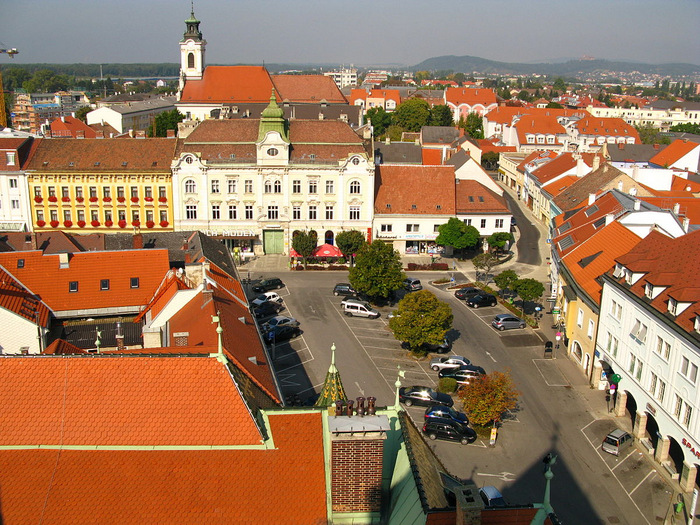 Joadl / Wikimedia Commons
The main square of Kornoeburg, behind the town hall
We approached the Town Hall Information Desk and a polite and serviceable young lady, born many years after the camp had closed, had not heard about the camp and referred us by phone to the local town historian – Mr. Franz Kaupe. We were fortunate enough because my German was in bad shape but Mr. Kaupe possessed good English skills. I told Mr. Kaupe my family had stayed in the transit camp at Kornoeburg, for a while, when I was a kid, in the early sixties and Mr. Kaupe was eager to meet us.
Mr. Kaupe led us excited to the transit camp and his instructive and courteous explanations were accompanied with a perpetual smile.
|
| The Transit Camp at Korneuburg |
|
The original buildings of the military camp were erected by the municipality of Korneuburg in 1889 and leased to the Austro-Hungarian army for forty years. Additional buildings were built by the Nazi army, the German Wehrmacht, in 1939-1940 and these served as the later transit camp. During World War II, parts of the camp were destroyed. In 1955, the Russians evacuated the camp as part of the Allied exit from Austria. In 1956 the camp began to serve as a Hungarian refugee camp due to the uprising against the USSR. Between 1960 and 1965, the camp was rented out to the Jewish Agency for Romanian Jews on their way to Israel. Today, the buildings serve as an adult educational institution as well as a hostel.
I do not have any real memories from the camp due to young age and the short time we spent there. From others, I realized that the conditions in the camp were not satisfactory because of the Jewish Agency's people who ran the place – crowding, food and poor sanitary conditions and even hostility from the local population.
It should be acknowledged that the Austrian authorities played an important role in the Jewish immigration effort to Israel from Eastern Europe, in the sixties and the seventies, in the sensitive political era of the "Cold War".
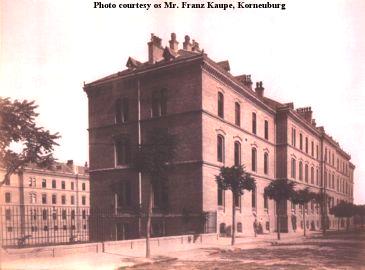 courtesy of Mr. Franz Kaupe, Korneuburg
The main building of the transit camp in the early sixties
|
 The building today – 2019
|
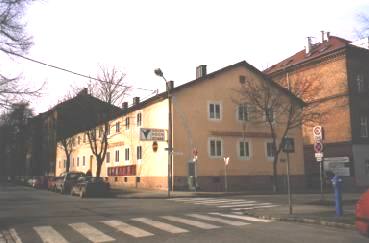 courtesy of Mr. Franz Kaupe, Korneuburg
The administration building and the kitchen of the camp in the early sixties
|
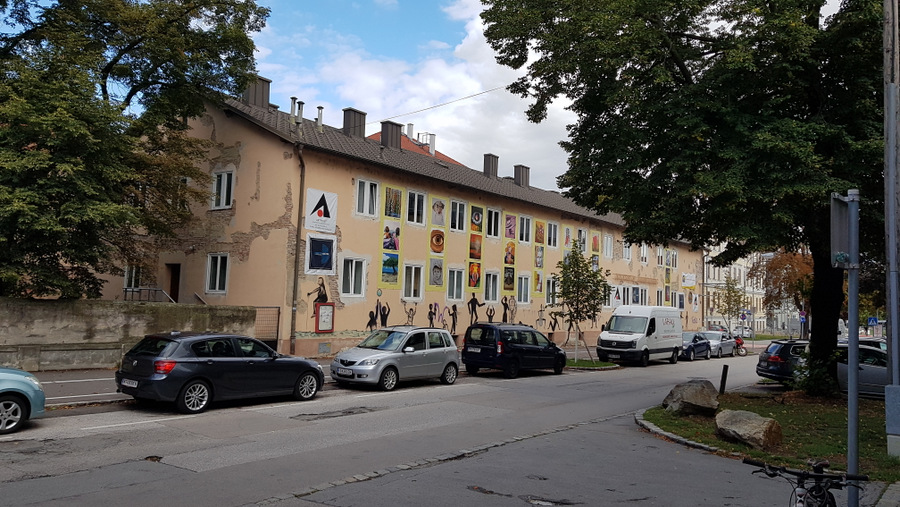 The building today – 2019
|
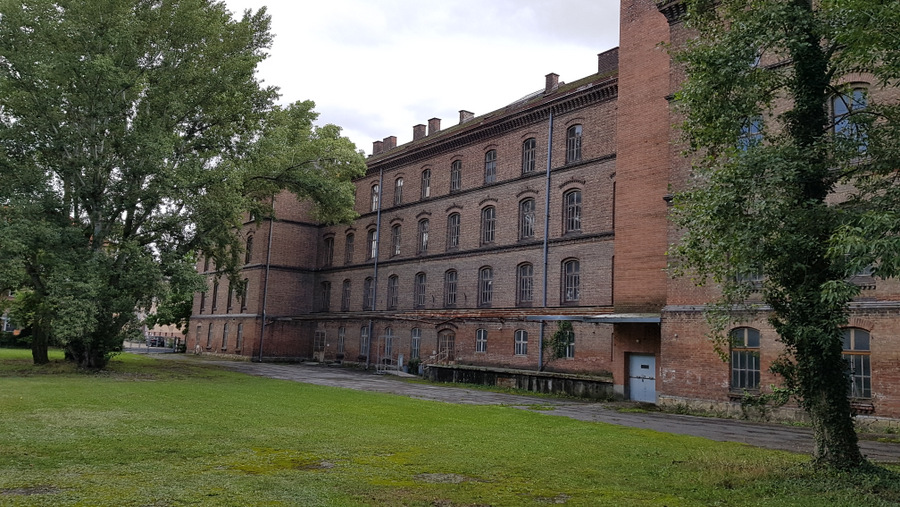 The rear part of the main building today
|
The camp is located today at the corner of Liebleitner Ring and Chimanigasse streets, adjacent to the main street of Korneuburg Stockerauerstraße. The camp is now known as the Albrechtskaserne (Albrecht Barracks) named after a prominent Austro-Hungarian general - Feldmarschall Erzherzog Albrecht.
|
| The Old Synagogue of Korneuburg |
|
At the end of our tour expected us a pleasant surprise – the old Synagogue of Korneuburg. This is one of the oldest and most important sites of its kind in Central Europe. The building is dilapidated – the roof is ruined, moss covers the crumbling walls, windows and shutters are broken.
The attempts to restore the building failed because of a legal dispute with the property owner. Since the town authorities consider the synagogue a valuable cultural asset, there is a local interest in restoring it and opening it to the public as the restored synagogue may become a tourist attraction.
The first Jews arrived at Korneuburg due to a flourishing trade in the area in the 13th century. From that time there is evidence for boys' and girls' schools established by the Jewish community. In the 14th century, the Jews of Kornoeburg were deported due to anti-Semitic events and since then there has been no significant Jewish presence in the town.
The synagogue is located on Roßmühlgasse Street.
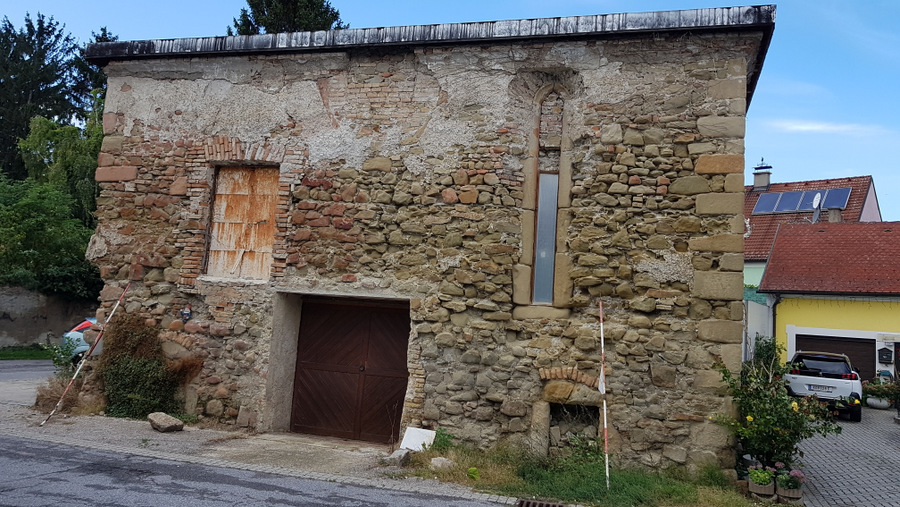 The Old Synagogue of Korneuburg
|
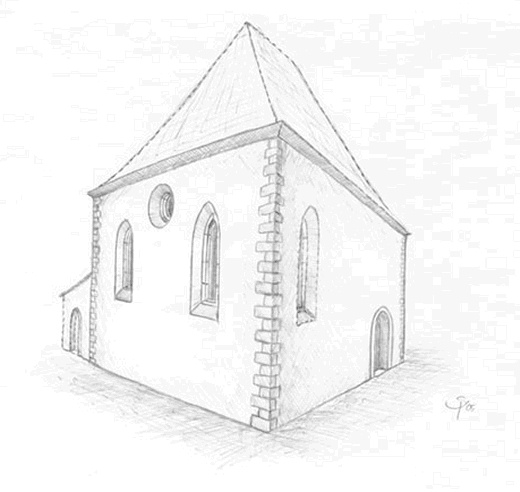 credit: Simon Paulus, 2005
The Reconstructed Synagogue
|
|
| Mr. Franz Kaupe |
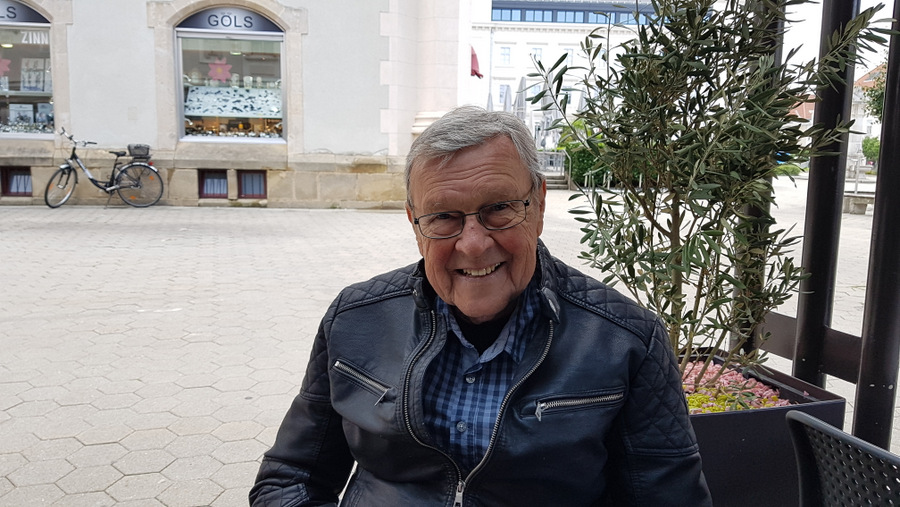 Mr. Franz Kaupe, Korneuburg
|
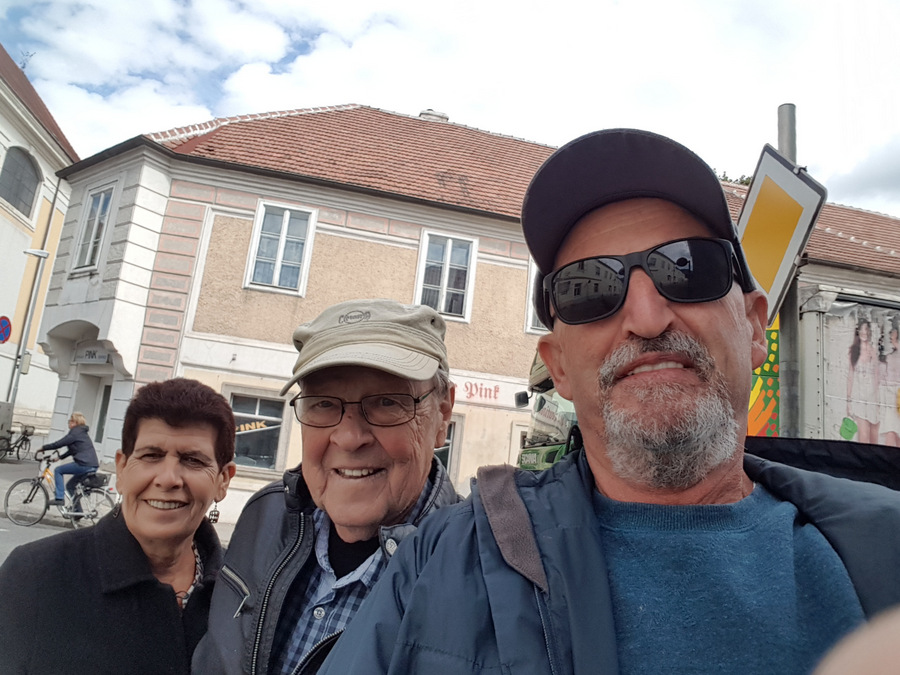 The Three of Us
|
 Mr. Franz Kaupe and I
|
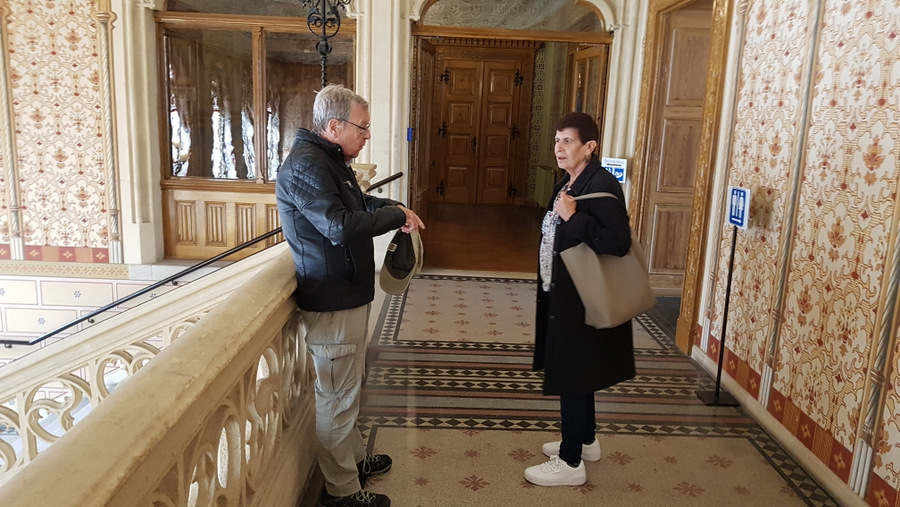 My wife Esther and Mr. Kaupe discussing in the City Hall
|
|
| The End of the Odyssey |

In the photo, my parents, Erna (Ella) and Israel Rubin, and I in front of our hut, our temporary residence in Dimoan, Israel, immediately after immigrating to Israel in early 1962. This is probably our first family photo in Israel.
|
| Resources |
|
|
Source: Wikipedia
|
|


